
By Daniel Brooks — Sonar Shield. Daniel Brooks is an editorial pen name used by Sonar Shield.
A fishing plan should include a reason to change it. Before your next practice day, write down the conditions you expect, what you intend to test and the observation that would send you to a different approach.
Why Bryan Thrift is on the watchlist
In its September 22, 2026 profile, Major League Fishing looks at Bryan Thrift ahead of The Champions on Old Hickory, October 29–31. The report highlights his strong history in championship events and his enthusiasm for a five-fish format. It also describes his expectation of a demanding fall bite that may reward varied approaches.
Read MLF's original Thrift profile. This is a preview, not a prediction or a tournament result. Sonar Shield did not interview Thrift, and the checklist below is our editorial preparation exercise—not a set of instructions attributed to him.
Build your own practice card
- Name the event's objective. Read the current organizer's rules before planning around a format. Record scoring, legal fishing time, fish limits and electronics restrictions. Do not assume rules from another circuit or last season still apply.
- Give Plan A a job. Write what you are testing: an area, depth band, cover type or presentation. A clear question helps you distinguish useful practice from repeating casts without learning anything.
- Choose a meaningfully different Plan B. Decide which variable changes if Plan A gives you little information. Testing another depth or cover type can answer a different question than changing several nearly identical baits.
- Define a review point. Choose a point in your practice schedule to stop and assess. Ask what you actually observed: bites, follows, bait, accessible cover or a change in conditions. A review point is a prompt to think, not a universal rule to leave fish after a fixed number of minutes.
- Write the next decision before moving. Note what you are changing and why. If everything changes at once, it becomes harder to understand which choice mattered.
Keep an evidence column
A useful notebook separates observation from explanation. “Two bites beside shaded cover” is an observation. “They will stay there all day” is an assumption. Record the first, then make the second something to test.
Use four short headings: question, observation, decision, follow-up. Include time and relevant conditions. A blank page full of tackle names is less useful than a few clear notes that explain why you changed direction. Photographs of your own setup can help you restore a known arrangement after experimenting.
Let the equipment routine support the plan
Before practice, know which outfit serves each approach and where it will be stored. Keep the usable deck space clear and return protective accessories to a designated place when removing them. The point is to reduce avoidable confusion around your gear, not to carry every possible setup onto the deck.
The Sonar Shield gear below is a general option for readers organizing their own rods. We do not claim Thrift uses or endorses these products, and this article does not identify his equipment.
Shop Sonar Shield rod protection

Neoprene Fishing Rod Sleeves
Choose the Spinning or Casting version for your rod's guide arrangement. View current sizing, options and availability before ordering. Rod and reel are not included.
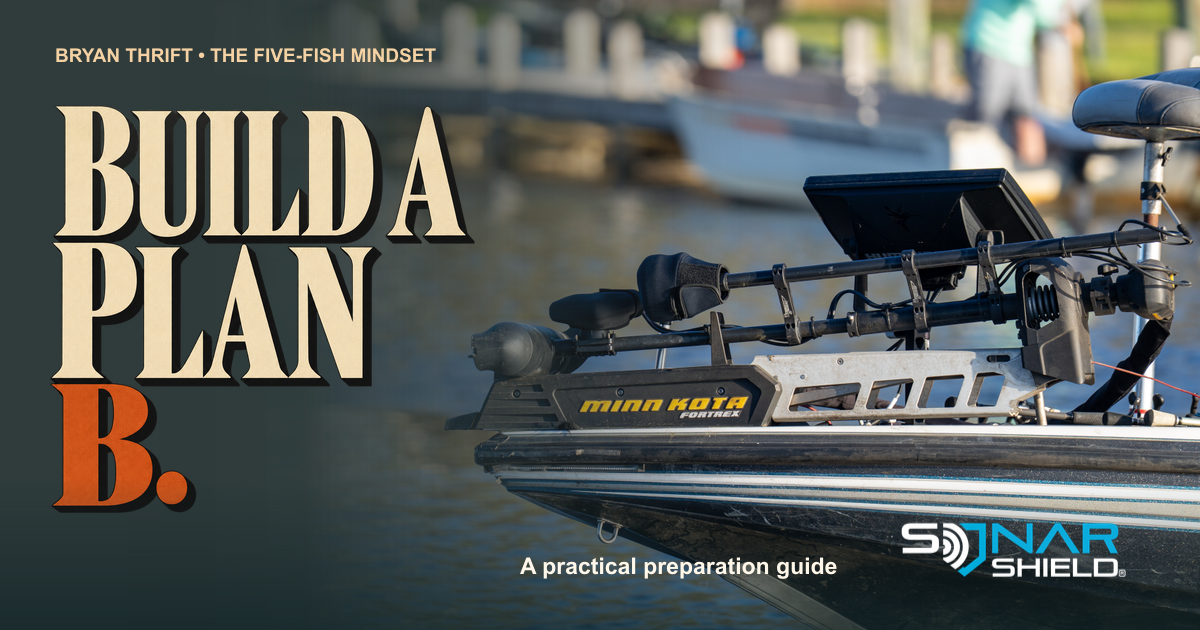
Image: Sonar Shield's own library photograph, used to illustrate bass-boat preparation. It does not depict Bryan Thrift or his boat.
What observation makes you change your fishing plan? Share a specific example another angler could learn from.