
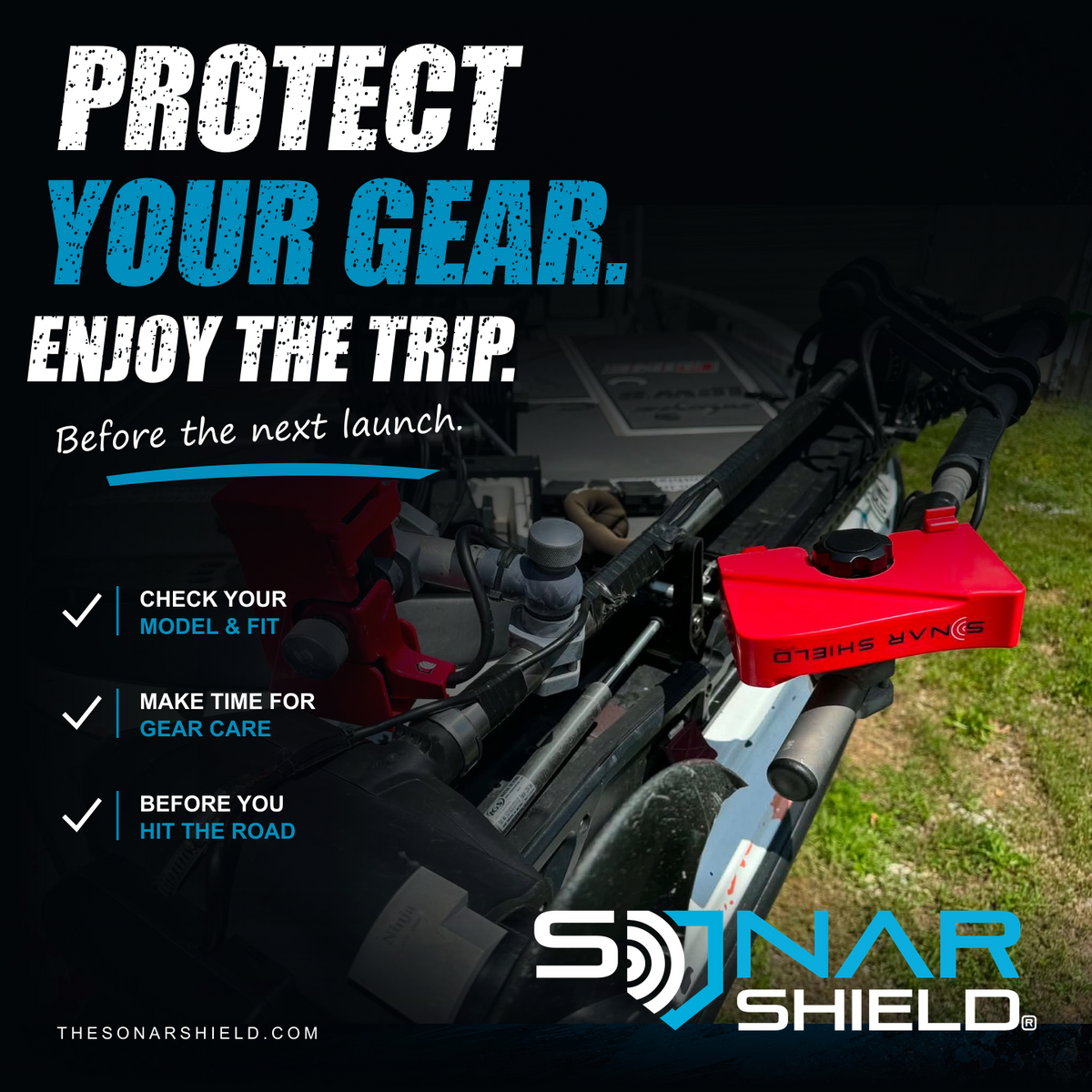
Your transducer deserves a place on the same pre-trip checklist as your batteries, tackle and trailer. Before towing your bass boat, identify the exact transducer model, check its cover and cable routing, and confirm that the equipment is secured according to the manufacturer’s instructions.
This checklist focuses on the trip from the driveway to the ramp. It is a practical inspection routine, not a substitute for your transducer, trolling-motor or cover instructions.
1. Match the cover to the exact transducer model
Start with the model number on the equipment or your purchase records. A chartplotter’s name is not enough to identify the transducer connected to it. Record both separately so you can find the right fit information later.
Sonar Shield lists separate covers for models including Garmin LiveScope LVS34, Lowrance ActiveTarget and ActiveTarget 2. Check the individual listing rather than assuming that accessories fit every generation within a brand. Browse the Sonar Shield transducer cover lineup and confirm the model before ordering.
Useful setup note: Keep a phone note with your transducer model, cover model, mount type and a photo of the correctly fitted cover. It gives you a quick reference when preparing the boat or asking for fit help.
2. Inspect the cover and transducer before fitting
Look over the housing and cover for visible damage, loose parts or debris. Follow the product’s cleaning guidance before fitting the cover. If something no longer seats as expected, investigate the cause instead of forcing it into place.
Fit the cover using its supplied instructions and check the specified retention method. A cover that appears to sit in position still needs its intended fastening or retention step completed. If the fit is uncertain, send the model details and clear photos to Sonar Shield before the next trip.
3. Check the cable in the transport position
Inspect the setup in the position it will actually occupy while towing. Look for cable sections caught beneath equipment, pressed against an edge or pulled tight. Check the area around the transducer as well as the route toward the mount.
Use the equipment manufacturer’s routing and stowing instructions. Do not choose a bend radius, clamp pressure or fastening method by guesswork. A transducer cover protects a different part of the setup from cable-routing hardware; fitting one does not complete the cable inspection.

4. Check the surrounding gear
Look beyond the covered transducer. Nearby tackle boxes, tools and other loose items deserve attention before the boat moves. Secure the boat’s equipment using the appropriate supports and manufacturer-specified travel procedures.
The cover is one part of equipment care. It does not replace a required trolling-motor support, mount restraint or trailer check. Avoid treating any cover as a guarantee against damage.
5. Make the launch check a separate habit
At the ramp, pause before deploying the equipment. Follow the cover’s instructions for removal and use, and confirm that the setup is ready for operation. Do not assume a transport cover is intended to remain fitted while fishing.
Give removed covers a dedicated storage location. That simple habit makes the return-trip check easier and helps keep loose accessories out of the way.
A checklist to save on your phone
- Confirm the transducer and cover model.
- Inspect the housing, cover and retention parts.
- Fit and secure the cover as instructed.
- Check cable routing in the stowed position.
- Secure nearby gear and required travel supports.
- At the ramp, complete the cover-removal and deployment checks.
Common transducer-cover questions
Will one cover fit every forward-facing sonar model?
Do not assume it will. Match the exact model to the product listing and instructions. Similar names or appearances do not establish compatibility.
Does a transducer cover fix poor sonar readings?
A protective cover is not a troubleshooting repair. If readings change, use the sonar manufacturer’s diagnostic guidance to investigate the setup. Do not assume a cover will correct a software, installation or hardware issue.
What should I check if the cover no longer fits properly?
Confirm the model, inspect for visible damage or obstructions, and review the fitting instructions. If you still cannot confirm a correct fit, contact the cover manufacturer before using it for transport.
Build a routine you will actually use
A short checklist is useful when it becomes part of every trip. Save your setup details, keep your covers together and repeat the same inspection before towing and before launching.
Find the right starting point in our model-specific transducer covers. For fit questions, contact Sonar Shield at Sales@Thesonarshield.com with your model and setup photos.
Community question: What equipment check do you never skip before leaving for the lake? Share this checklist with your fishing partner and compare routines.
Keep learning with Sonar Shield
Bookmark Understanding Sonar for more equipment-care guides. Save this checklist for your next trip, and share it with an angler who is building a new setup.
Got a routine that belongs on the list? Send your tip and equipment model to Sales@Thesonarshield.com. Specific details make the conversation more useful for other anglers.