
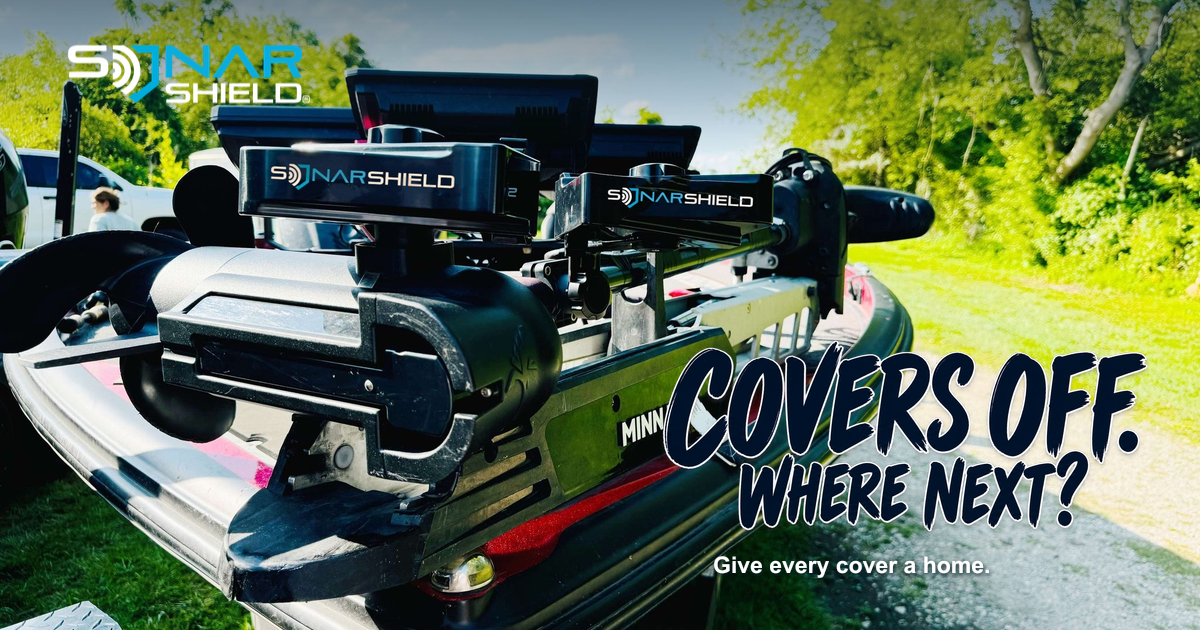
A cover that has a home is easier to find when the boat is back on the trailer. A bass boat can carry more than one transducer, several display covers and a handful of small accessories. The awkward part is often the transition: where everything goes between the drive, the launch and the trip home.
Find Sonar Shield transducer covers for your model →
Try this launch-and-load routine
- Before the ramp: decide where the covers will go. Choose a compartment or suitable gear bag that keeps them out of foot traffic and away from loose hooks. Make this part of preparation while parked out of the launch queue.
- Before operating: remove travel protection as instructed. Follow the instructions for each cover and sonar system. Put each removed cover directly in its designated place rather than leaving it loose on a seat, deck or truck bumper.
- After loading: retrieve, inspect and refit. Once the boat is secured in the appropriate preparation area, check each cover for trapped grit or loose objects, match it to its transducer and secure its intended closure.
- Before leaving: account for the whole set. Look at every protected component. Confirm that no removed cover is left on the dock, no bag is bearing against a connector and no accessory is interfering with the equipment's intended transport position.
This is Sonar Shield's organization routine, not a replacement for your boat, motor, transducer or cover instructions.
Two sonar systems: keep the pairs obvious
A familiar shape is not enough to identify a cover. Keep a short note naming the transducer at each position and the cover that belongs with it. Label the storage pocket or bag if that helps, rather than covering equipment labels, vents or operating surfaces. A phone photograph of the correctly prepared setup can be a useful reference when someone else helps load the boat.
For example, “bow — LVS34 — matching cover” is more useful than “Garmin cover.” The same principle applies when two transducers share a brand but differ in generation. Check the current product listing when changing hardware or mounts.
Keep storage simple and repeatable
Choose a location you can reach without unloading half the boat. Keep loose sinkers, hooks and sharp tools separate from protective accessories. Follow the care instructions for the cover's actual material; a molded shell and a fabric accessory may require different handling. Inspect before refitting rather than trapping debris against the equipment.
If you fish with a partner, agree on who removes and replaces each cover. A quick handoff—“both transducer covers are back on”—is clearer than assuming the other person finished that part of the routine. It also gives you a reason to check both positions instead of noticing only the most visible one.
Make the product fit the equipment
Sonar Shield covers are selected by the equipment they protect. The real photograph shows two covers installed on a stowed bass-boat setup; it is an example of organized transport protection, not a model-identification chart. The shopping links let you choose from your own exact transducer information.
Explore Sonar Shield gear

Garmin LiveScope Plus LVS34 cover
A model-specific example with an injection-molded ASA shell and a latch. Choose this listing for the exact LVS34, then check your mounting arrangement and preferred available color.
For another transducer, browse covers by brand and model. For shade at the display, explore fish finder visors. Current options and availability are on the product pages.
Where do your covers live while you fish? Share the storage habit that helps you keep track of them. A practical idea from another angler can be more useful than adding another compartment to the boat.