
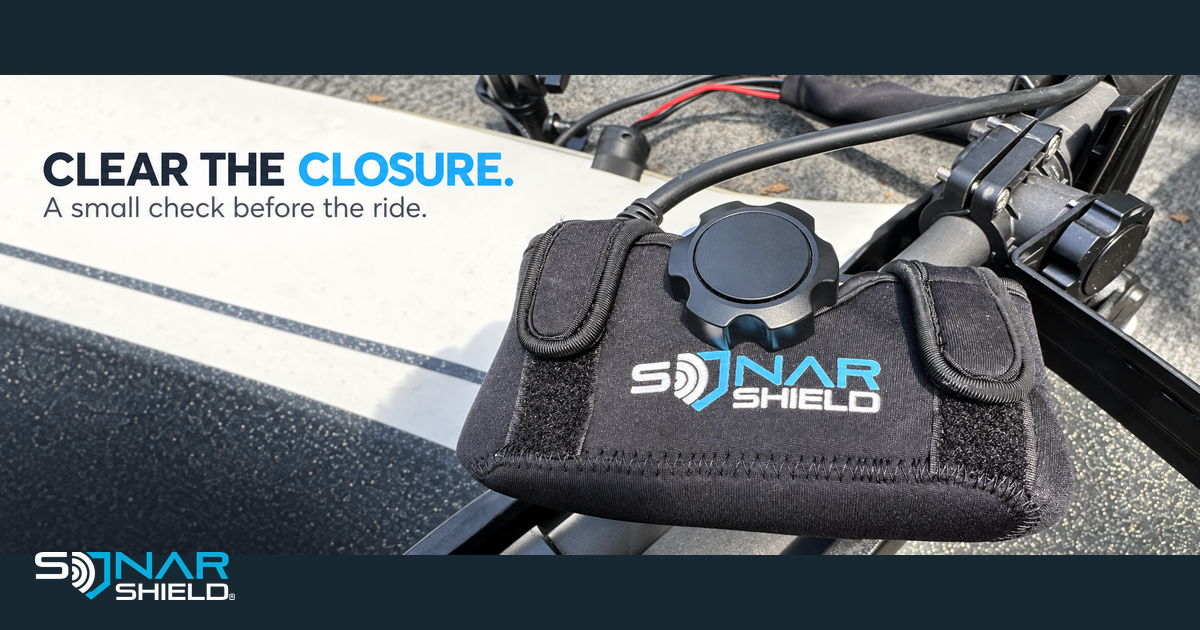
A neoprene transducer cover deserves a quick inspection before it goes back on the boat. Start with the fastening tabs: remove grit, check their condition and confirm the cover closes properly without forcing it around cables or hardware.
Shop Sonar Shield transducer covers — choose your exact model
1. Look inside before you close it
With the equipment secured and the cover removed, inspect the inside surface and both sides of each closure. Look for sand, dried vegetation, loose threads or other debris. Rinse away salt, grit and debris as directed in the Sonar Shield care information. Let textile and neoprene products dry completely before storage.
A cover should not become a place to trap debris against the equipment it protects. Cleaning it is part of the routine, not something to save for the end of the season.
2. Check the tabs, seams and fit
Look for cuts, fraying, stretched or loose closures and damaged stitching. Stop using a damaged cover. Do not add improvised hardware, force an incorrect fit or assume a similar-looking transducer uses the same cover.
Seat the correct cover fully and close every intended fastening point. Check that the closure has actually engaged and that no cable is caught between the mating surfaces. Follow the instructions for your exact cover and mount; the photograph illustrates a flexible-cover arrangement, not universal fit.
3. Check clearance in the transport position
With the motor or pole secured for transport according to its manufacturer, make sure the cover and closures are clear of cables, hinges and moving hardware. The cover is not a substitute for the equipment’s transport support or tie-down. If it will not stay properly seated, stop and resolve the fit before traveling.
4. Remove before deploying the transducer
Sonar Shield transducer covers are for trailering, transport and storage. Remove the cover before deploying or operating the transducer. Keep it in a designated place so you can find it after the trip, then inspect it again before refitting.
A repeatable three-point check
- Clean: no loose grit or debris inside or at the closures.
- Condition: no cut, frayed, loose or damaged parts.
- Closure: the correct cover is seated and secured, with cables and moving hardware clear.
This routine does not make a cover waterproof or guarantee against damage. It is a practical way to spot a problem before transport.
Explore Sonar Shield gear
Transducer covers: compare the model-specific options and current availability in our transducer-cover collection. Match the full transducer model before ordering. The photo is an example from our installed-product library; it is not a claim that one cover fits every sonar.
Care reference: consult the Sonar Shield Product Safety & Compliance Library and the instructions for your equipment. This article draws on its inspection, securement, cleaning, drying and remove-before-use guidance.