
By Emily Reed. Emily Reed is an editorial pen name used by Sonar Shield.
There is more than one way to belong in bass fishing. A tournament schedule can be exciting, but a relaxed morning learning a technique can matter just as much.
Pat Gilliland’s story
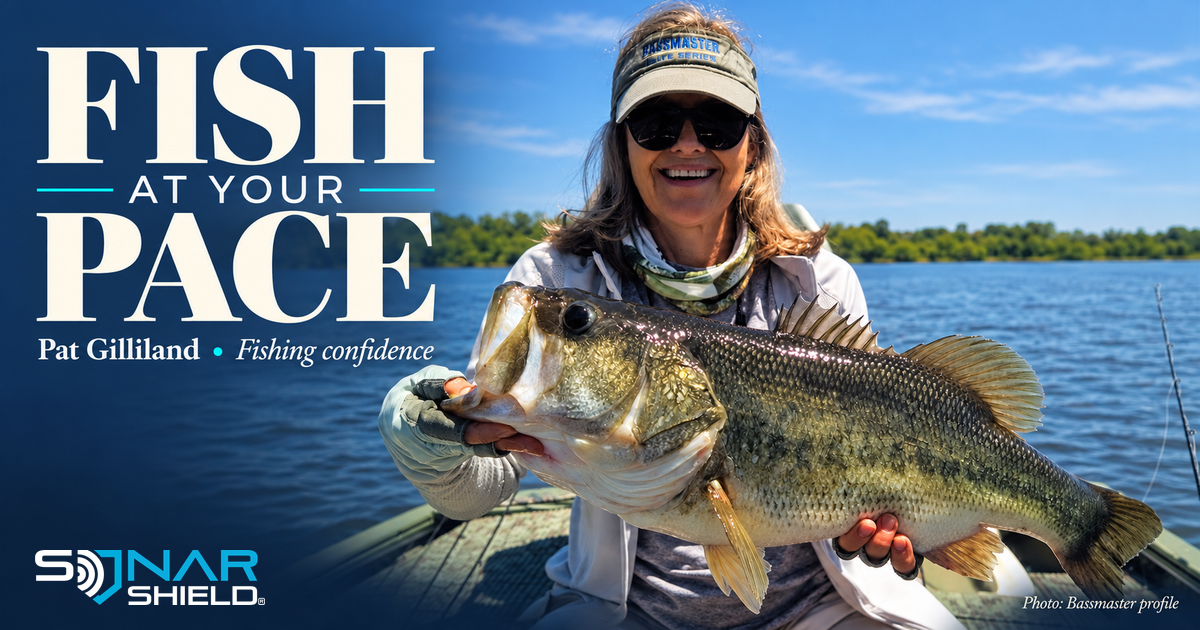
Bassmaster’s September 23, 2026 profile of Pat Gilliland, by David A. Brown, describes how a welcoming workshop environment helped renew her fishing confidence and enjoyment. Her story offers an encouraging starting point for anglers who want to participate at their own pace.
We have not interviewed Gilliland. The practice ideas below are Sonar Shield’s own editorial suggestions, not quotations or advice attributed to her.
Build an outing around one useful goal
Before choosing tackle, decide what would make the trip worthwhile for you. It could be placing a cast beside a visible target, learning a familiar stretch of shoreline or understanding one display control. Write that goal in one sentence. A smaller goal gives you something concrete to practice without turning every cast into a test.
Agree on the pace with your fishing partner
If you are sharing a boat, discuss the plan before launching. Ask for time to repeat a cast or ask a question. Agree on who handles the boat and equipment, and leave room to pause. Clear expectations help keep a learning trip from quietly becoming someone else’s practice session.
Make one change you can explain
Pick a manageable comparison: the same lure retrieved more slowly, or the same cast approached from another angle. Observe what changed. You do not need a tournament-quality conclusion. A short note such as “I could feel the bottom more clearly on the slower retrieve” is useful information for the next outing.
When electronics are involved, use the manual for the exact model. Avoid copying a stranger’s entire settings screen at once. Learn what one control does and restore a known starting point when necessary.
Finish with something worth repeating
At the end, write down one thing that felt easier and one question for next time. Count skills as well as catches: setting up without rushing, communicating clearly or recognizing a familiar piece of structure all make future trips more approachable.
There is no requirement here to fish alone, enter an event or buy another piece of equipment. Choose the version of fishing you want to return to.
Explore Sonar Shield gear
Organize your own setup
A suitable cable holder can be part of your equipment routine. Check actual mounting requirements, routing and current options before buying. The current H-Strap listing contains conflicting diameter figures; confirm fit with Sonar Shield. No claim is made that Gilliland uses or endorses this product.
What helped you feel more comfortable on the water?
A patient fishing partner, a workshop or simply more time practicing?
Source and photograph: Bassmaster’s Pat Gilliland profile, September 23, 2026. Image adapted for this editorial feature. Emily Reed is an editorial pen name, not a claimed interview subject or fishing credential.