
Shop the Sonar Shield Garmin LiveScope Plus LVS34 Transducer Cover. A good fishing day deserves an easy finish. The right cover gives your LVS34 a familiar place in the pack-up routine, ready for travel and storage between outings.
A cover for the part of the day between fishing
Your transducer has a job on the water. A travel cover has a different job when the fishing is finished. Keeping those roles clear makes the routine straightforward: use the cover for its stated transport and storage purpose, then remove it before sonar use.
The current Sonar Shield listing identifies this cover specifically for the Garmin LiveScope Plus LVS34. It describes an injection-molded ASA shell, a quick-release lever and single-hand latching and unlatching. Those features are meant to make covering and uncovering a normal part of ownership rather than another complicated task.
Covered for the trip. Clear for the water.
When your LVS34 is working in the water, give it a clear view. Keep its sonar-emitting surfaces and intended sonar path unobstructed. Garmin’s LVS34 installation guidance specifically recommends mounting the transducer as far from the trolling motor as possible to avoid obstructions in the sonar image.
Our approach is simple: protect the transducer during travel and storage, then remove the travel cover before sonar use. The quick-release latch makes that transition convenient, leaving no travel shell over the transducer while you fish. A cover does not need to stay on in the water to earn its place in your gear.
Give the cover a home while you fish
Before the first cast, decide where the removed cover will go. A familiar dry gear compartment or designated storage spot is easier to remember than whichever space happens to be open. Choose somewhere appropriate to your boat and the product directions, where it will not interfere with normal operation.
This is our suggested organizing habit, not a manufacturer installation procedure: pair the cover with a task you already complete at the end of a trip. When you finish putting away the equipment, retrieve the cover from its usual spot and fit it as directed. Repeatable placement saves the small search that can otherwise become part of every departure.
Let the latch make the routine simple
The product listing describes a quick-release lever and secure latching mechanism. Follow the supplied directions for your actual cover rather than forcing a procedure copied from a different model. You do not need an elaborate checklist to appreciate an accessory that belongs in a familiar routine.
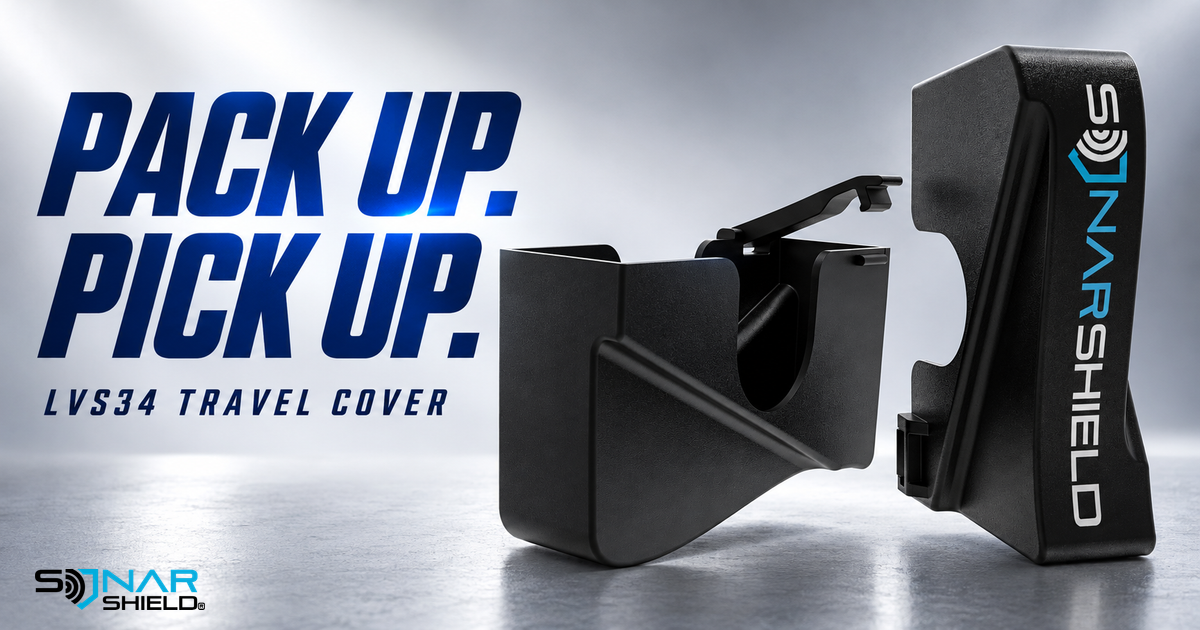
Our studio artwork shows both complete cover halves, including the latch and vertical Sonar Shield branding. It is based on our own catalog image. It does not depict an invented installation or demonstrate a measured impact test.
Choose the exact model, then choose your look
Start with the LVS34 model name, then select your preferred option from the current product page. The page offers several colors, including the black cover shown here. Availability can change, so use the live listing rather than treating a graphic as a stock announcement.
A similar silhouette does not establish compatibility. LVS32, LVS34 and other transducer families have their own listings. If you need help choosing, share the exact equipment model with Sonar Shield before ordering. That keeps the choice useful without turning it into guesswork.
Finish the day with the next outing in mind
Put the covered equipment and the rest of your gear in their normal travel arrangement according to the applicable instructions. The benefit is a tidy, repeatable transition from fishing to the trip home. Protection is part of that routine, not a promise that any accessory eliminates every possible impact or changes sonar performance.
See the LVS34 cover and current options, or browse accessories for your other electronics. Where does your cover live while you are fishing?
Created with AI assistance using Sonar Shield's topic direction and research from the sources cited in this article.