
The first ice trip should start with a ready sonar kit. Preparing for the 2026–27 ice-fishing season now gives you time to find the missing cable, check your battery instructions and decide how the transducer will travel. A useful starting point is the complete setup you actually own, laid out where you can inspect it.
Explore Sonar Shield transducer covers by model → A cover is one part of the packing plan; match it to the exact transducer.
Your before-first-trip sonar checklist
- Write down the system. Record the display, transducer, sonar module if fitted, pole or shuttle, battery and charger model. Keep a photo of their labels with your kit notes.
- Check compatibility before changing mounts. Use the manufacturer's instructions for your particular ice kit or pole. Confirm the transducer orientation, bracket and cable arrangement rather than assuming the summer mount transfers unchanged.
- Inspect the entire cable route. Look for visible damage, strained connectors and pinch points. Check the route with the pole in its intended working and packed positions. Stop and resolve damage before putting the system into service.
- Read the exact battery instructions. Identify its chemistry and specified charger. Check the permitted charging, operating and storage temperatures in that battery's manual. Do not borrow temperature limits or charging advice from a different ice bundle.
- Organize transport protection. Fit the correct transducer cover for transport as instructed, give the display its intended protection and keep heavy loose gear from bearing against electronics or connectors.
- Pack in the order you set up. Give the pole, transducer, power components and small accessories their own repeatable places. Check that closing the bag or loading the sled does not pull a cable tight.
- Plan the first setup and return-home check. Keep the manuals accessible. At the destination, remove travel protection before operating as the product instructions require. After the trip, inspect and care for the equipment before repacking.
Why a Sonar Shield belongs in the packing plan
A transducer cover adds a physical layer between compatible hardware and the bumps or rubbing that can occur while loading, carrying and storing equipment. That is the relevant Sonar Shield benefit here: protection during handling and transport.
For example, the Sonar Shield cover for Garmin LiveScope Plus LVS34 uses an injection-molded ASA shell and a latch. Match the cover to an LVS34 and check your mount arrangement before ordering. A product with “LiveScope” in its name is not automatically the same fit as every other LiveScope transducer, and this article does not establish compatibility with an LVS34-IF or any other variant.
A cover does not replace careful packing or secure retention of the complete kit. It is not a heater, a battery insulator, an ice-safety device or a software upgrade. We are not claiming that it prevents freezing or gives the sonar better target separation.
Battery preparation: identify first, follow the right manual
Garmin's portable and ice-fishing battery guidance points owners to the specific product manual for battery type, charging requirements, storage and maintenance. That matters when a kit has been modified or bought used: the battery inside may differ from the original bundle. Keep the battery maker's instructions with your packing notes and use the charger and conditions that manual specifies.
Make one short packing record
Use a note with five headings: models; cables; power; protection; missing items. Photograph the packed arrangement after checking it. On the next trip, compare against that record instead of relying on memory. This is a Sonar Shield organization suggestion, not a manufacturer installation procedure.
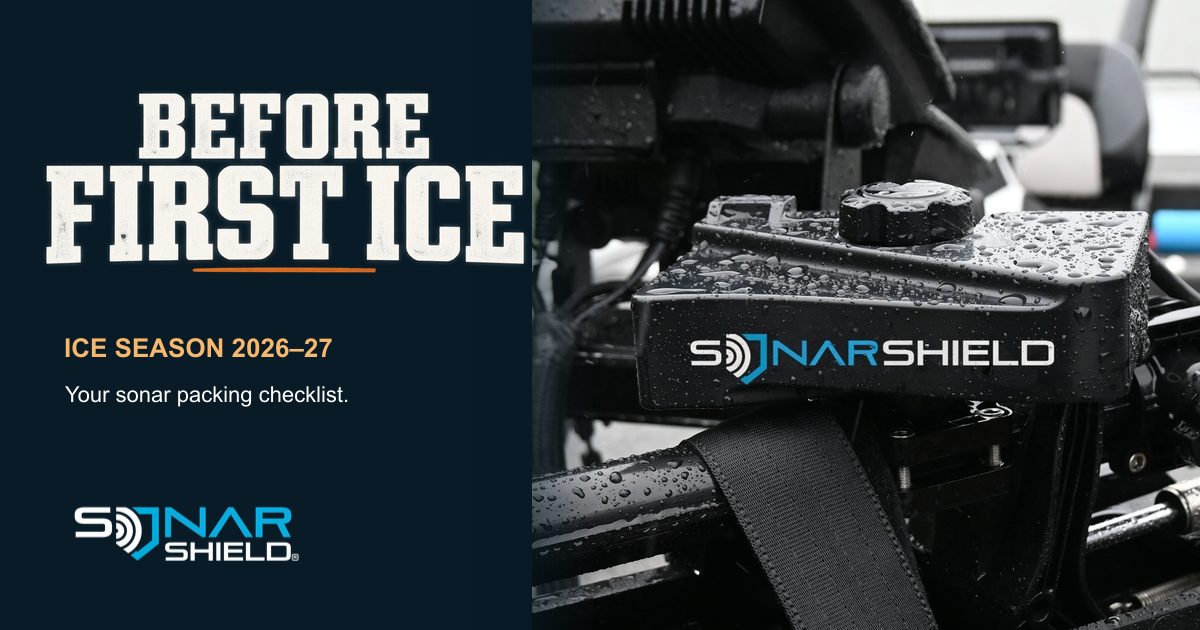
The main photograph shows a cover installed on a stowed boat transducer as an example of transport protection. It is not a photograph of an ice-fishing installation. Check your exact equipment and instructions when preparing your own ice kit.
Equipment readiness and ice conditions are separate checks
A prepared sonar kit says nothing about whether ice can support you. The Minnesota DNR's ice-safety guidance explains that ice strength varies and cannot be judged from appearance alone. Review current guidance from the relevant local authority and assess conditions for your location before any trip. This packing checklist is not an ice-safety clearance.
Choose protection for your transducer

Sonar Shield cover for Garmin LiveScope Plus LVS34
An example for owners of the exact LVS34 model. Check the product listing for fit, current options and availability; do not assume another LiveScope variant uses the same cover.
Use another sonar system? Browse transducer covers by brand and exact model. Let the current listing determine fit and options.
What always makes your ice-sonar packing list? Share your display, transducer and one preparation habit that saves time.